

TRUCKR ENTERPRISE APP
Overview
Truckr is an innovative system that is using technology to provide transparency, reliability, quality & efficiency in the logistics & mobility industry. With a range of enterprise software products developed for the mobility market. eg. tracking, delivery, fleet management & more.
The Truckr Enterprise dashboard connects shippers and transporters to move thousands of loads, saving money for shippers, increasing earnings for transporters and eliminating carbon emissions. The simple platform helps lower transportation costs and increase logistics efficiency for shippers by booking vetted vehicles and tracking their load from pickup to delivery. Transporters have better options, fewer empty miles and fewer wasted hours allowing them to earn more per day.
I created this logistics startup with 2 other brilliant individuals with complementary skillsets to grow and strategically position this entity for acquisition. I stepped in the role as the Chief Product Officer.
Role
I led the end-to-end design process for the app development team through a user-centred approach with a cross-functional team of 6 (including UX, Marketing, infrastructure and technology)
I led the research and synthesis of user data to direct user experience
I created complete interface designs, application & flow mapping, user journeys, wireframes, lo-fi and hi-fi mockups, and necessary iterations for final deliverables
I conducted post-deployment research to validate and iterate product features for an optimal user experience
Duration
2018-2021
Tools
Figma
Balsamiq
Photoshop
Trello
The Problem
The problem is waste. Waste in the freight industry occurs when truckers drive empty, typically because there are no nearby loads for the driver to pick up that are headed in the same direction as the driver.
Transporters account for their own expectations for empty miles when deciding how much they charge for any particular load, so everyone from shippers down to end consumers and, of course, the environment —ultimately pay the cost of empty miles. Estimates put empty miles around 40% in Ghana.
The Goal
High-Level Goal
Connect shippers to transporters to move millions of truckloads, saving money for shippers, reducing hassle for reliable transporters, and eliminating carbon waste for our environment.
Approach
Research
The purpose of this research was to understand the current situation, problems, constraints, people’s experiences, and opinions about public shipping and deliveries. We took time to go on a nationwide tour, visiting the capitals of the 10 regions in Ghana. We visited various stakeholders of this supply chain. This comprises farmers, processors and manufacturing facilities, and exporters of finished products to mention a few. We ended the research at the final destination which was Tema. This is the industrial and port city of Ghana where most trucks operate. Here we can find a lot of manufacturing companies and most importantly the major shipping port which also serves other West African countries. We made extensive use of Qualitative Research to understand the problem, gain users' empathy, and develop personas to guide my storyboards, user journey, and wireframe.
Personas
The results of the research provided me with an elaborate guide on what are the everyday challenges of truck drivers and shippers. After gathering insights, I found fascinating ideas about their needs, wants, motivations, expectations, and current problems, which, as a result of the users' answers helped me to create three personas.
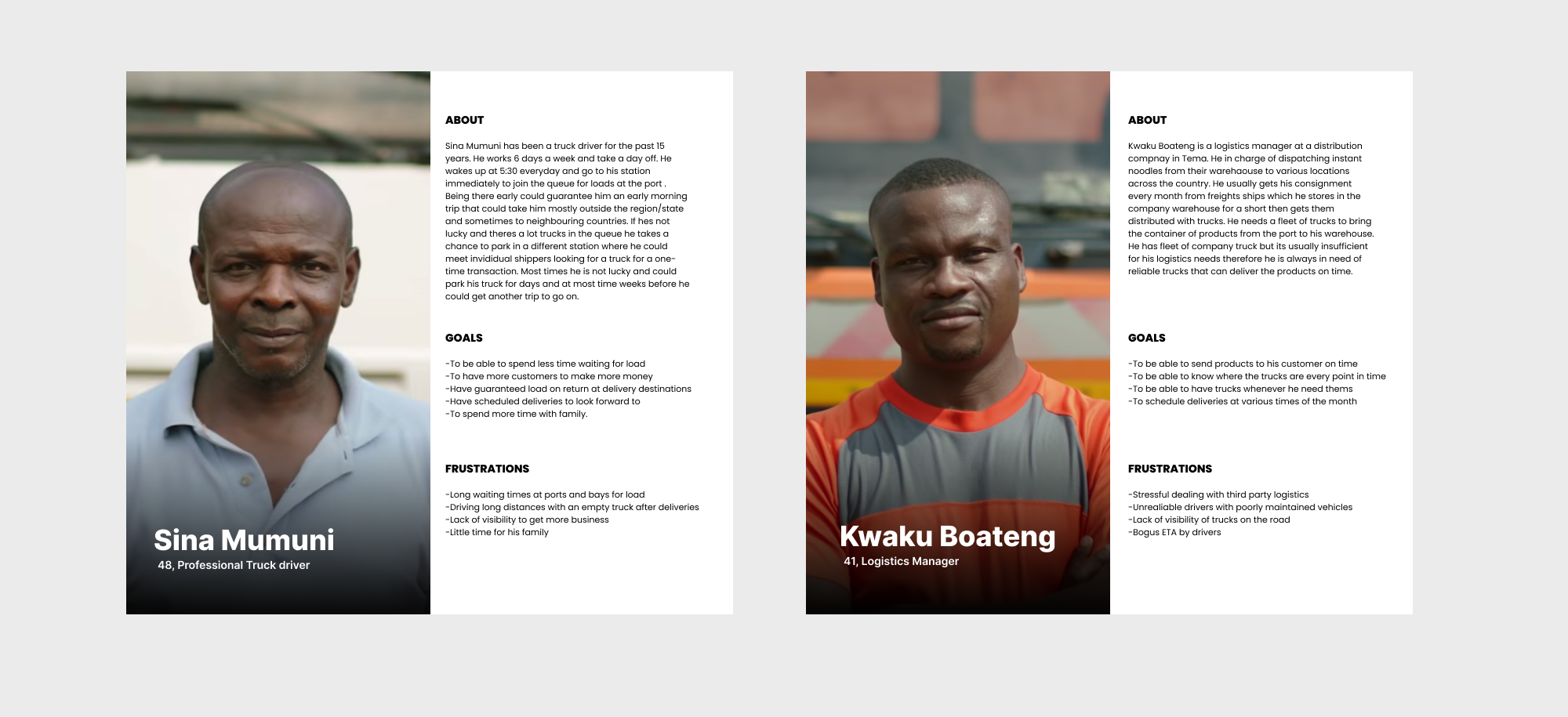
Empathy Maps
With the gathered data, we conducted an empathy map to organize all the insights. The goal was to understand our users’ needs and create a shared understanding of those needs with the team.
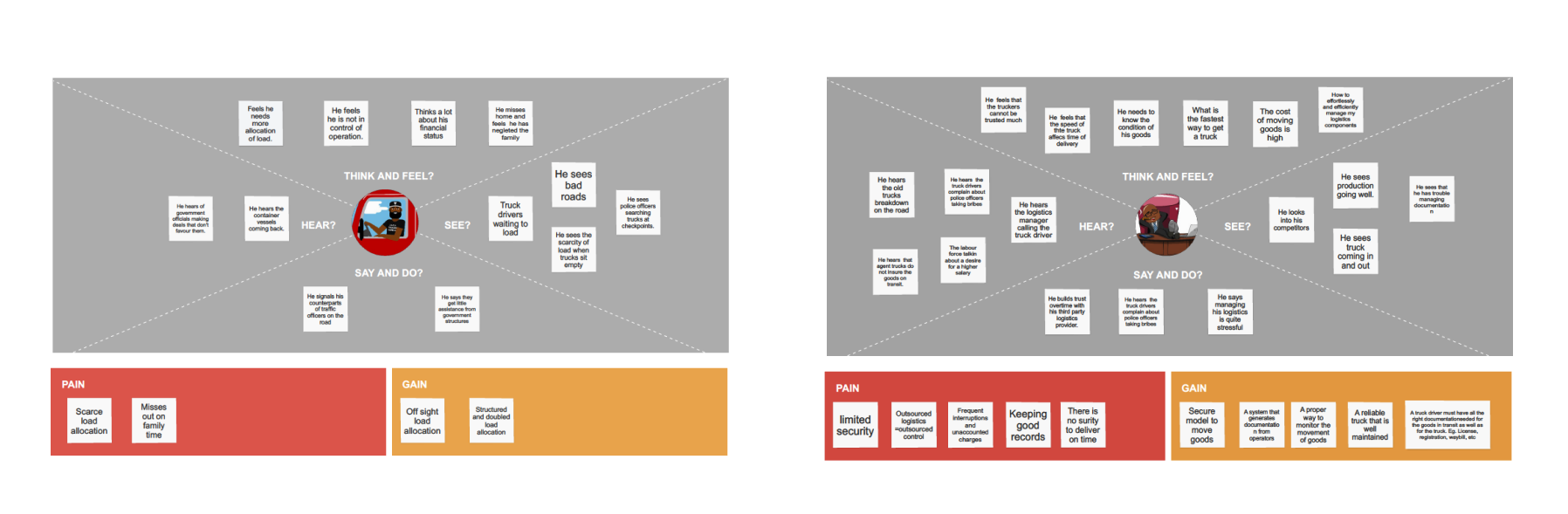
Empathy maps based to the sides of the marketplace
User Journey
After brainstorming, researching, talking to people, and having a better understanding of who I would be designing for, it was time to make use of all these pieces of information to find a solution. I categorized and prioritized the most common and most pressing pain points and would be highlighting them with the various ways they can be solved.
On-Demand Service
The driver is parked somewhere, at a point called A. Receives a request do you want to drive Xkm to pick up from B to deliver to C? Driver accepts. Now the app navigates the driver to B. When he arrives, the truck gets loaded, and the driver pushes a button to “Start the trip” Started. That means that there is visibility on the truck via the driver. At C the driver presses “Ends Trip”. Then as the returns to point A, he is connected to another load a long way and the process is repeated. This way the drivers earn 50-75% more money on a single delivery.
Pre-booking service
If the driver is parked at a location he gets a request which is 24hrs earlier to the trip due to the fact the system has the ability to delegate deliveries to all the drivers and this will, with this in place these will give the driver an amp-full of time to be able to prepare for the trip and plan.
User Flow
After a lot of consideration, I decided to focus on the driver to load which is the on-demand service. Creating a flow for the app allowed me to figure out each step of the users throughout the solutions.
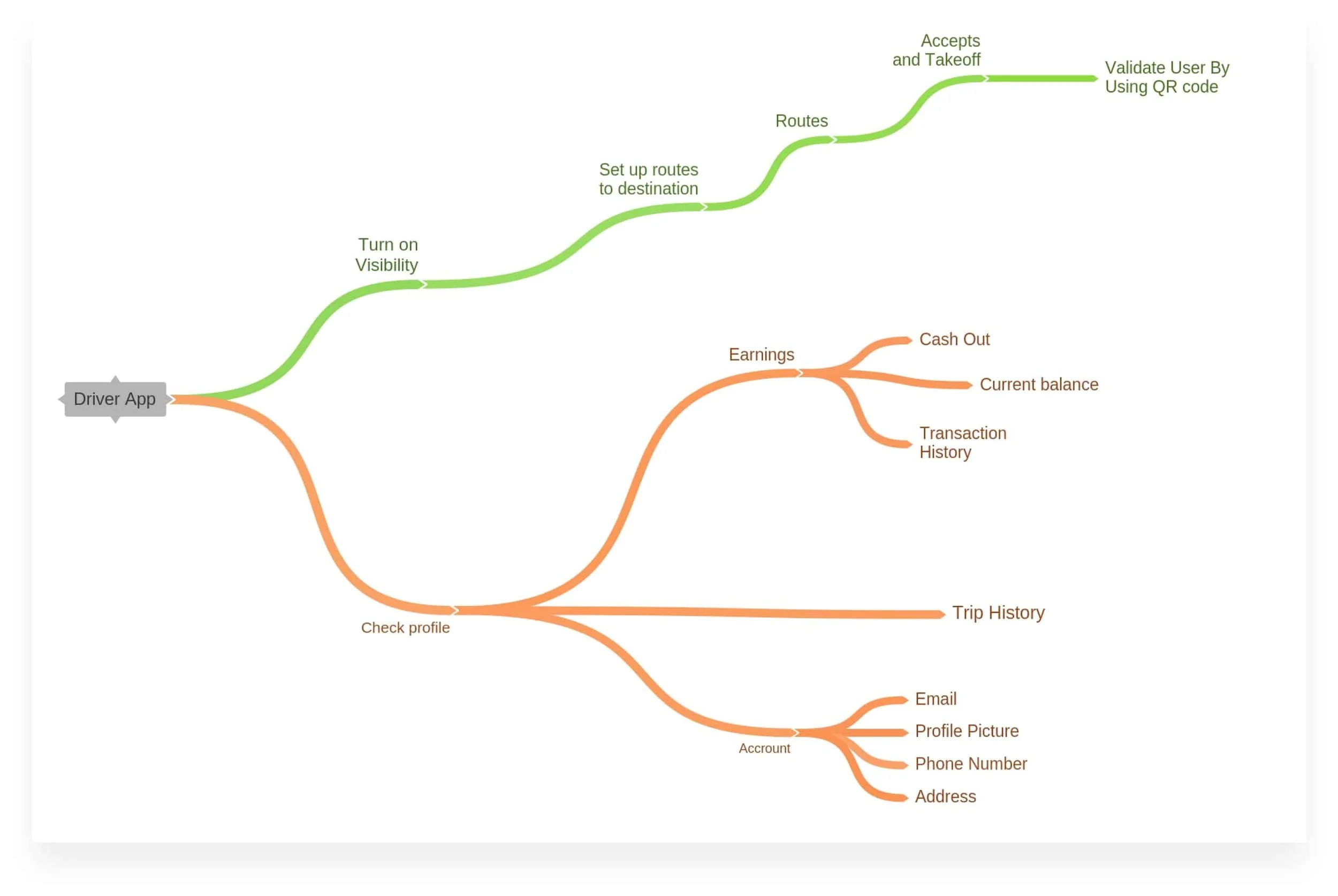
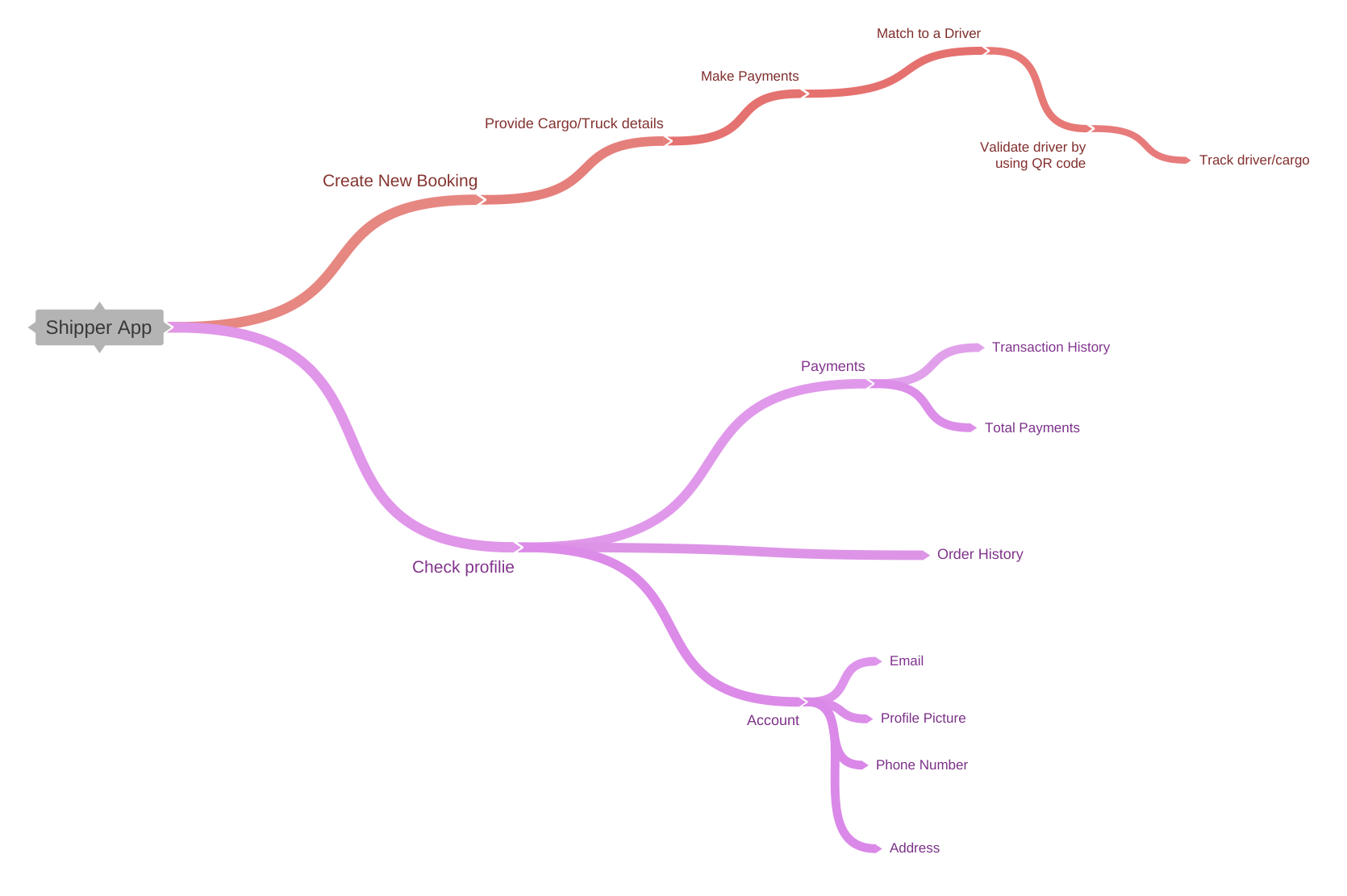
How The App Will Work
The model is pretty simple. The Driver wakes up in the morning sets a specific location on the app, and the app begins to poll requests from shippers within the area. The most important thing for the Driver is to know where, when, and how long will it take to pick up the load/cargo.
While picking up the load, there is a QR code that will be used for the Driver to confirm the pickup. After the pick up the driver drives to the destination that is on his mobile phone. When he arrives he ends the trip and gets paid. Then after he can poll requests from his location to his predetermined destination.
Visual Design
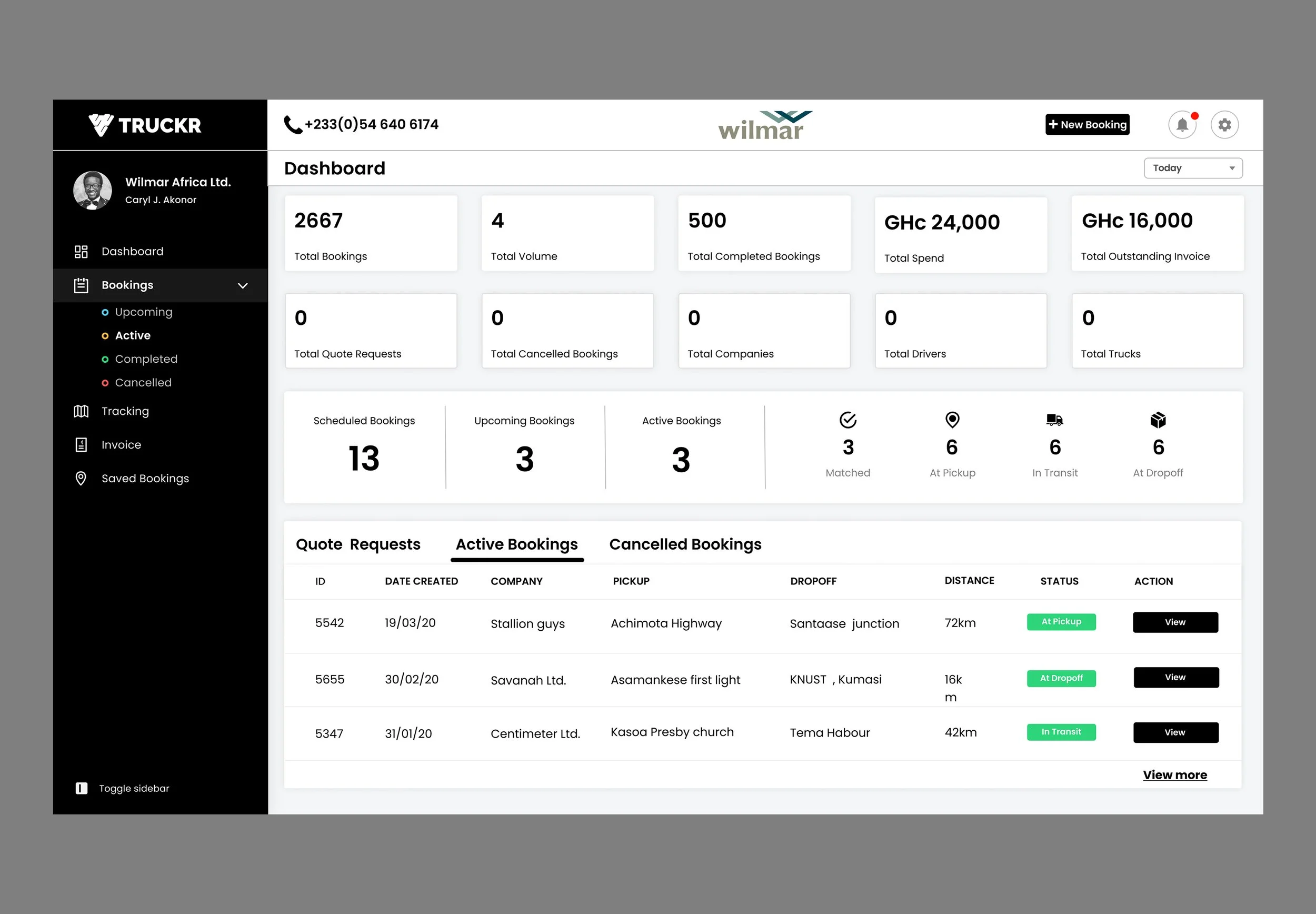
A first look at the dashboard, a welcoming screen that presents you a daily overview of your business at a glance.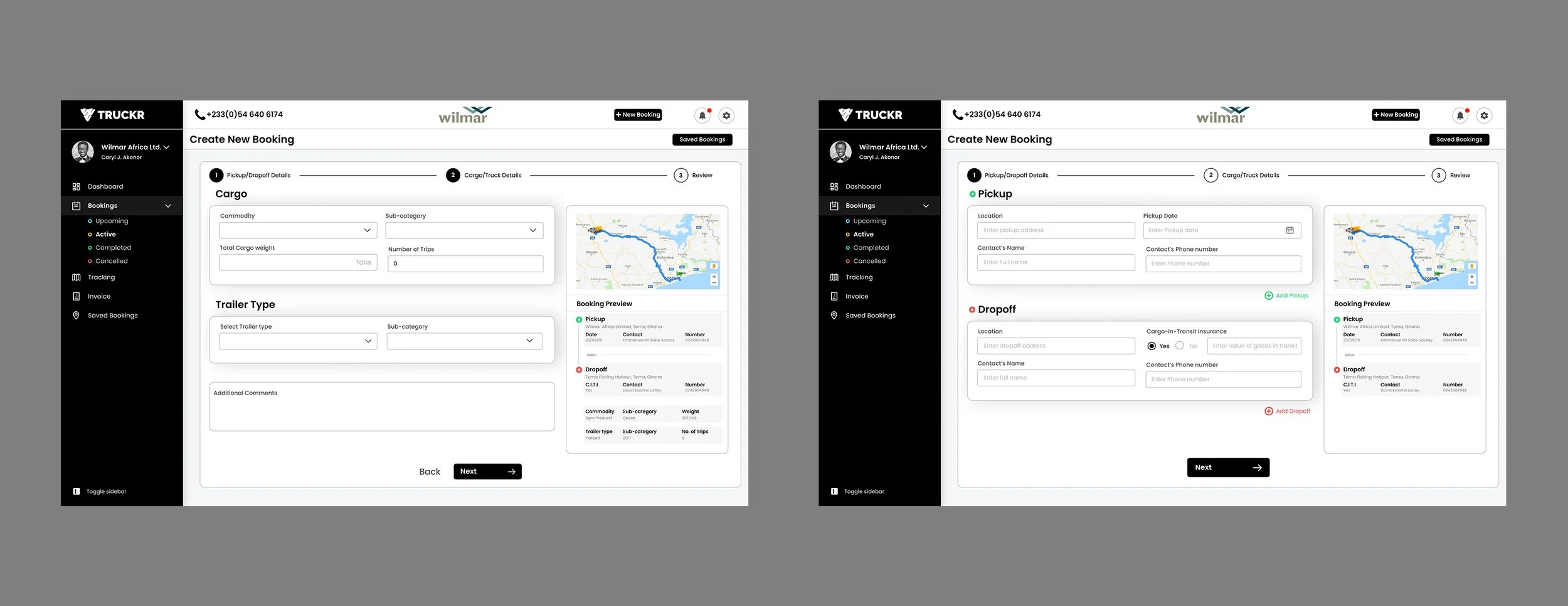
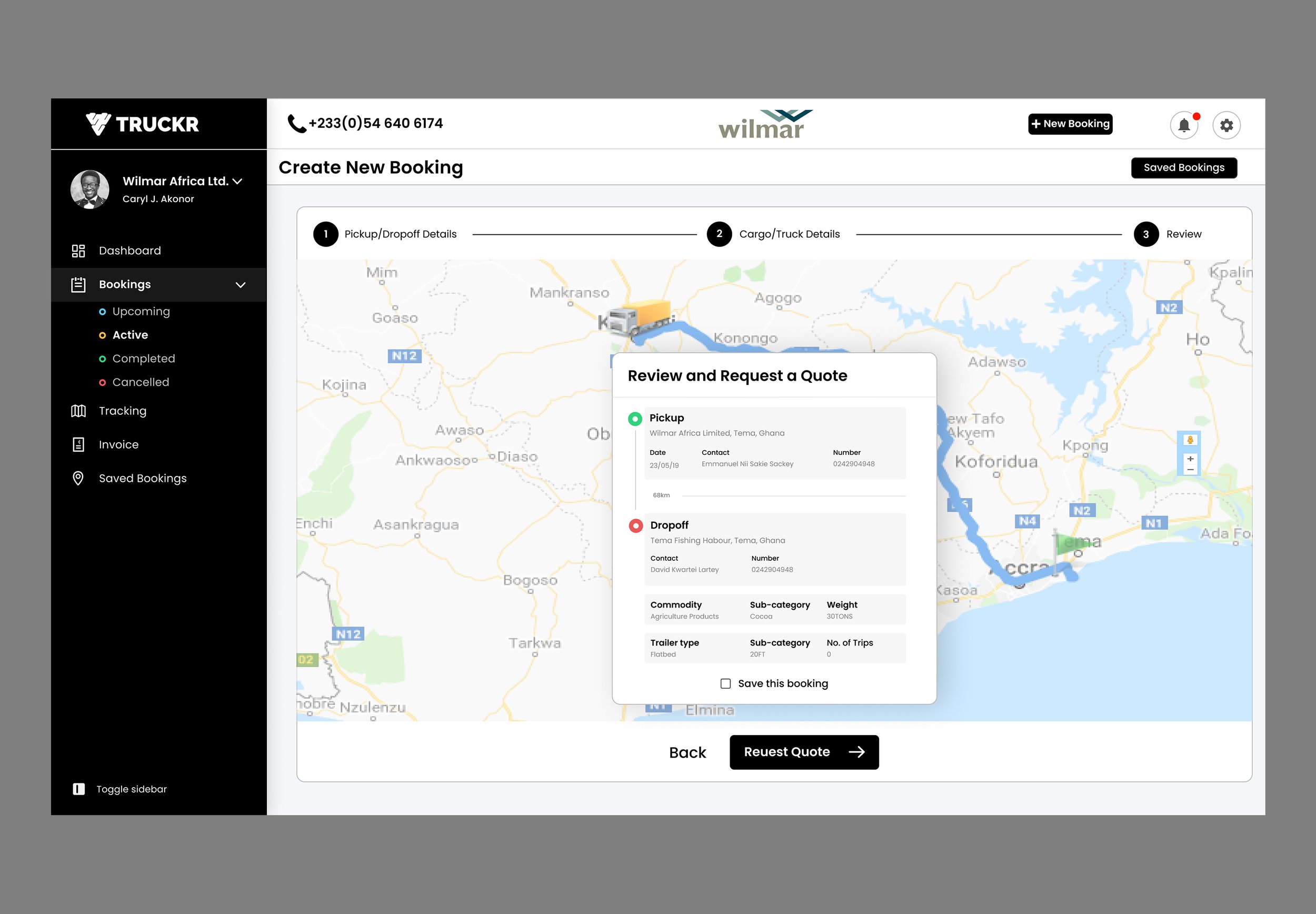
A simplified 3-step process for creating a request by the shipper with the ability to save the booking and reuse it later.
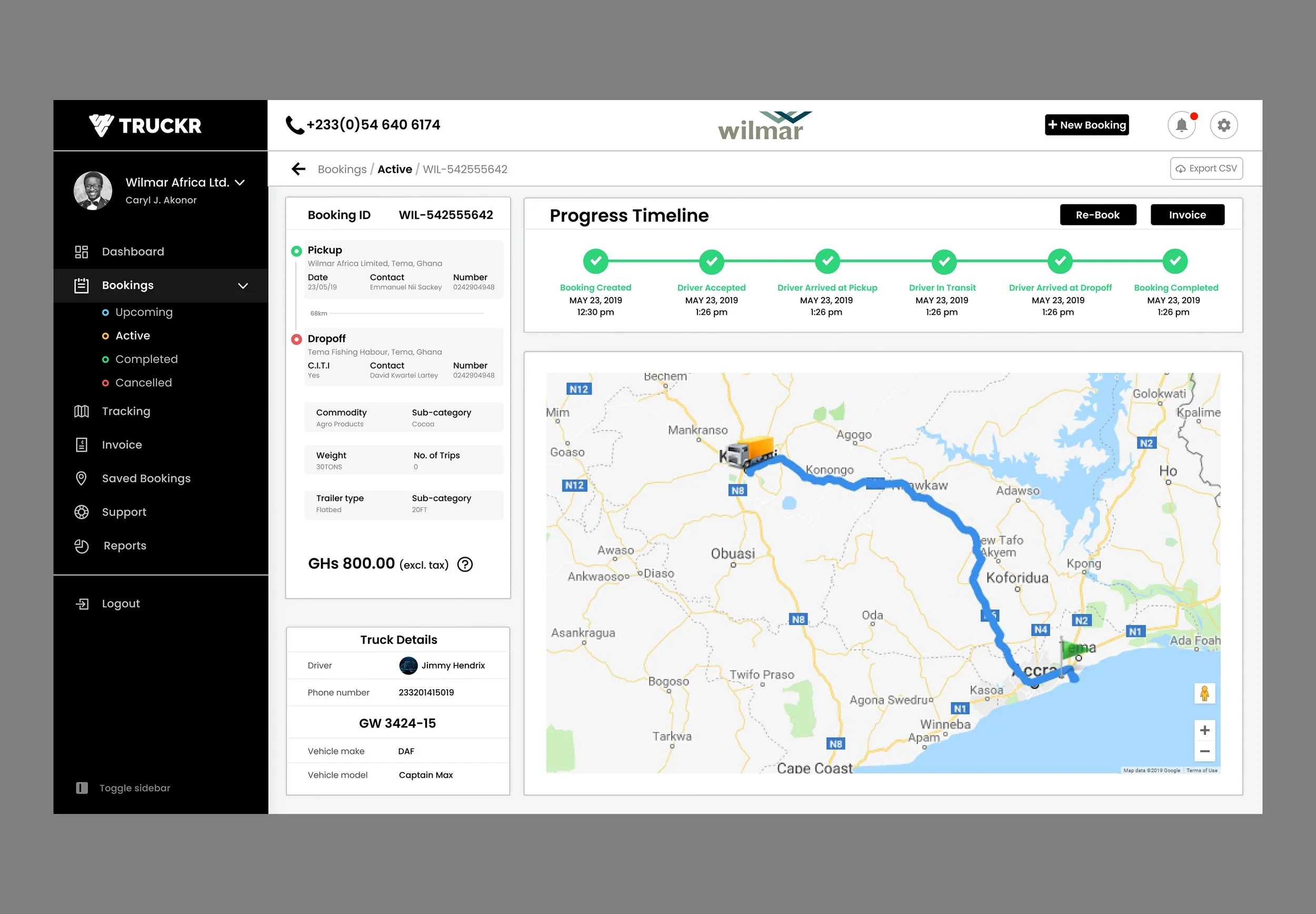
An overview of a completed booking, with a mapped delivery route.
Conclusion
What Did Learn?
Designing and researching the app has been a rewarding experience thus far. Right from the beginning, I had a major challenge how can I use my country's logistics system to give a better perspective on how this app can work knowing fulling well that my country's logistics system is really scattered? This led me to deeper research and I was able to come up with an experience that can work within a gridlocked city like Tema.
Takeaways
The use of mind map to understand the user journey was helpful.
No idea is less important; it’s all about the narratives. How well can you defend your idea.