
Overview
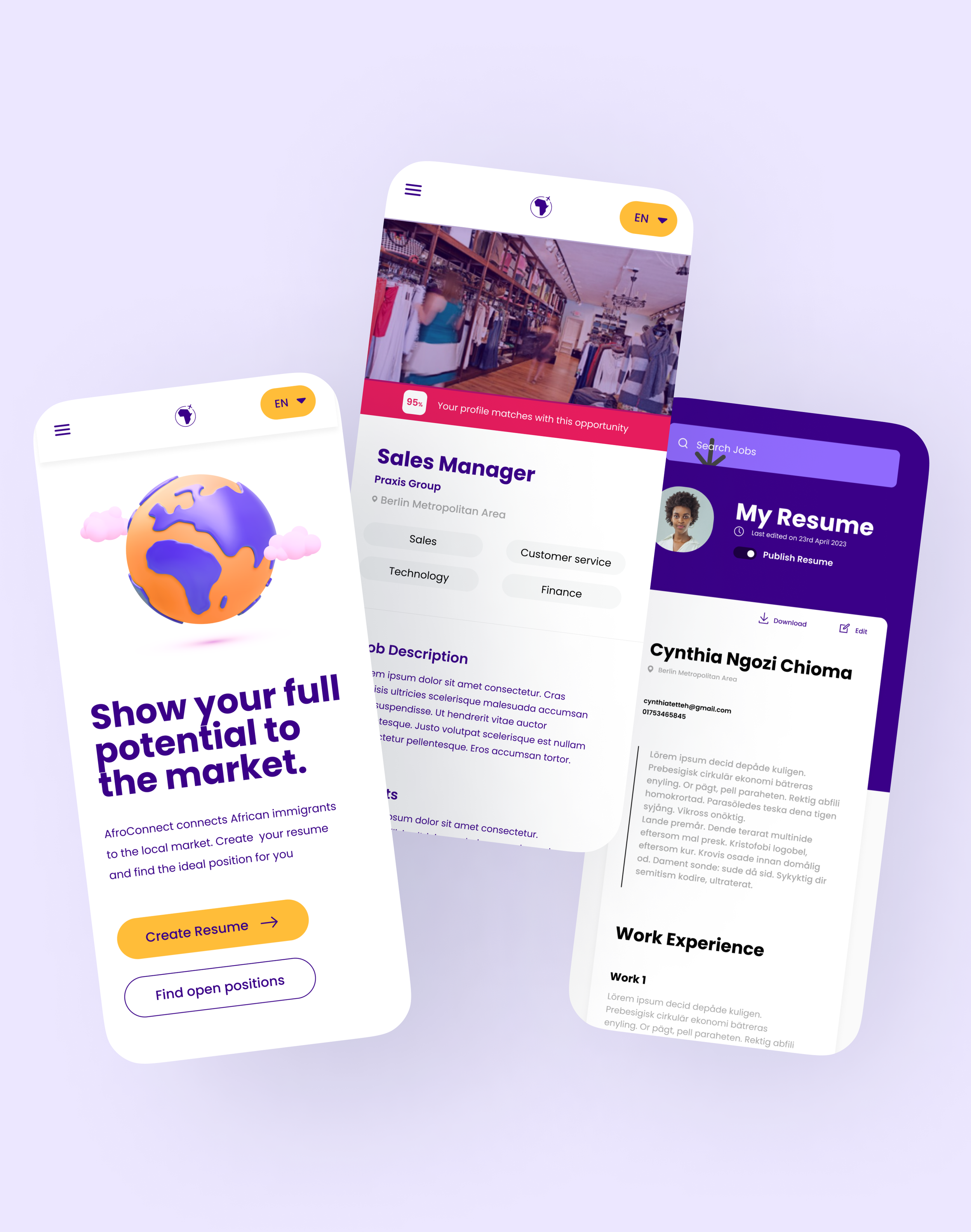
In recent years, the issue of immigration from Africa to Europe has gained significant attention due to various social, economic, and political factors. This UX case study focuses on addressing the needs of African immigrants who have already arrived in Europe. The goal is to design a digital solution that supports their integration, social inclusion, and overall well-being.

Role
Research, UX/UI & Strategy
Motivation
Passion Project
Timeline
Jan 2022- Dec 2022
Understanding
Problem
African immigrants in Europe often face challenges related to cultural adaptation, social integration, language proficiency, and accessing essential services. These challenges can lead to feelings of isolation, lack of opportunities, and difficulties in navigating their new environment.
Research
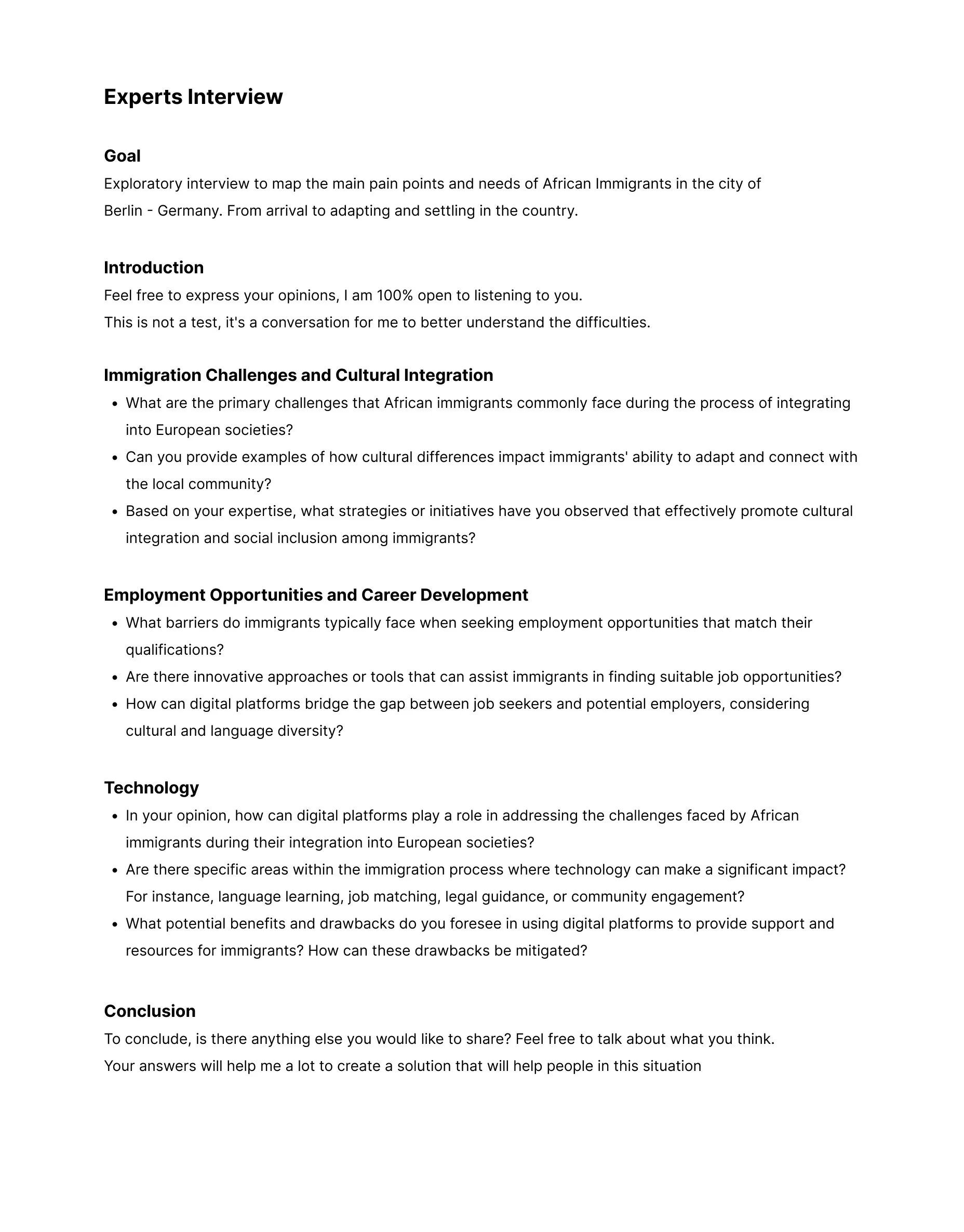
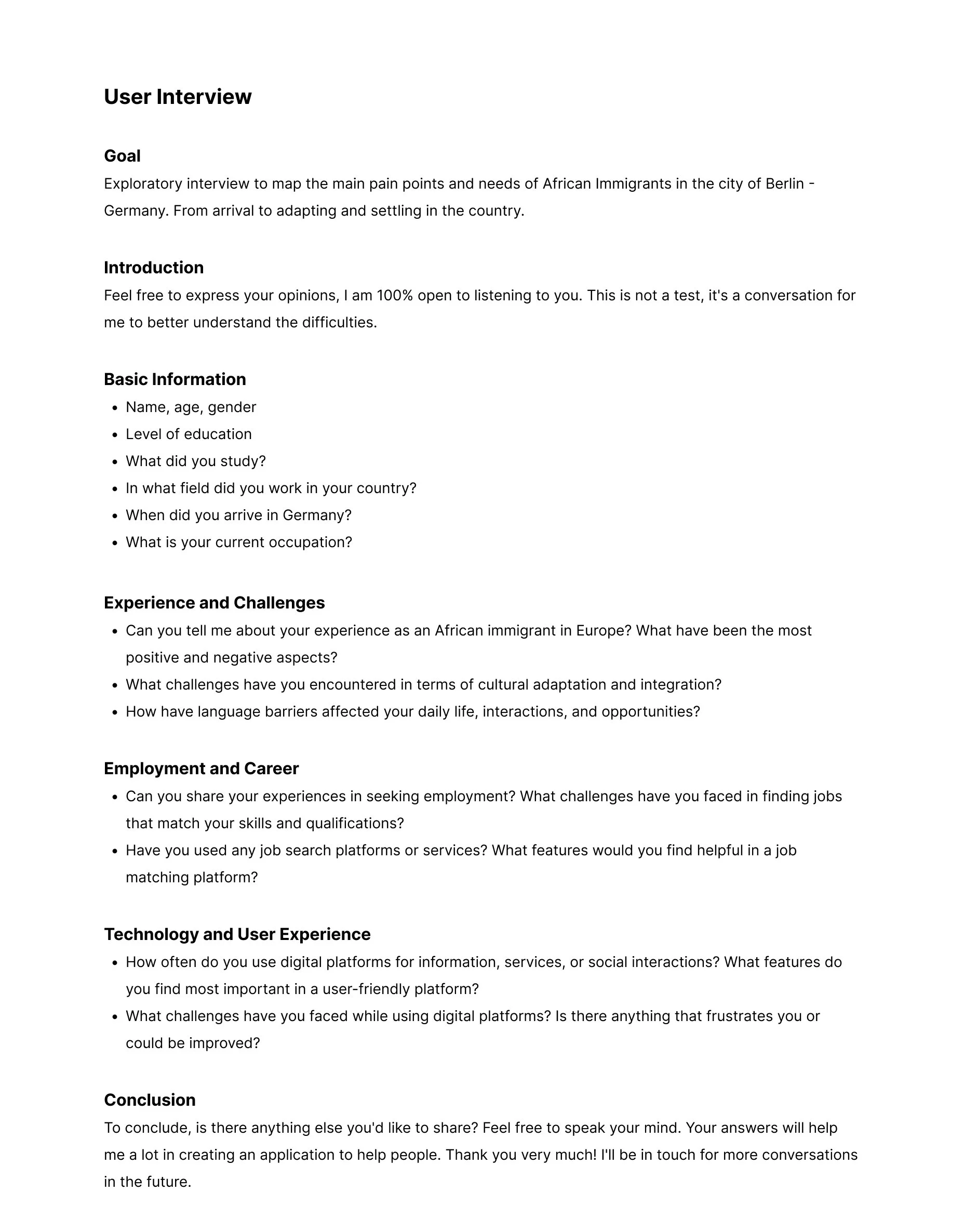
I conducted interviews with domain experts (immigration & career specialists) and potential users. I was looking for answers to the following main questions:
1. What are the primary challenges that African immigrants commonly face during the process of integrating into European societies?
2. What are the most significant barriers that African immigrants typically encounter when seeking employment opportunities that align with their qualifications and skills?
3. What role does language proficiency play in immigrants' successful integration and job prospects?
4. How often do they use digital platforms for information, services, or social interactions?
Expert Interview
User Interview
Meet David, one of the interviewees. He is brilliant and has a rich work history. But getting a job in his field is a quite difficult journey.
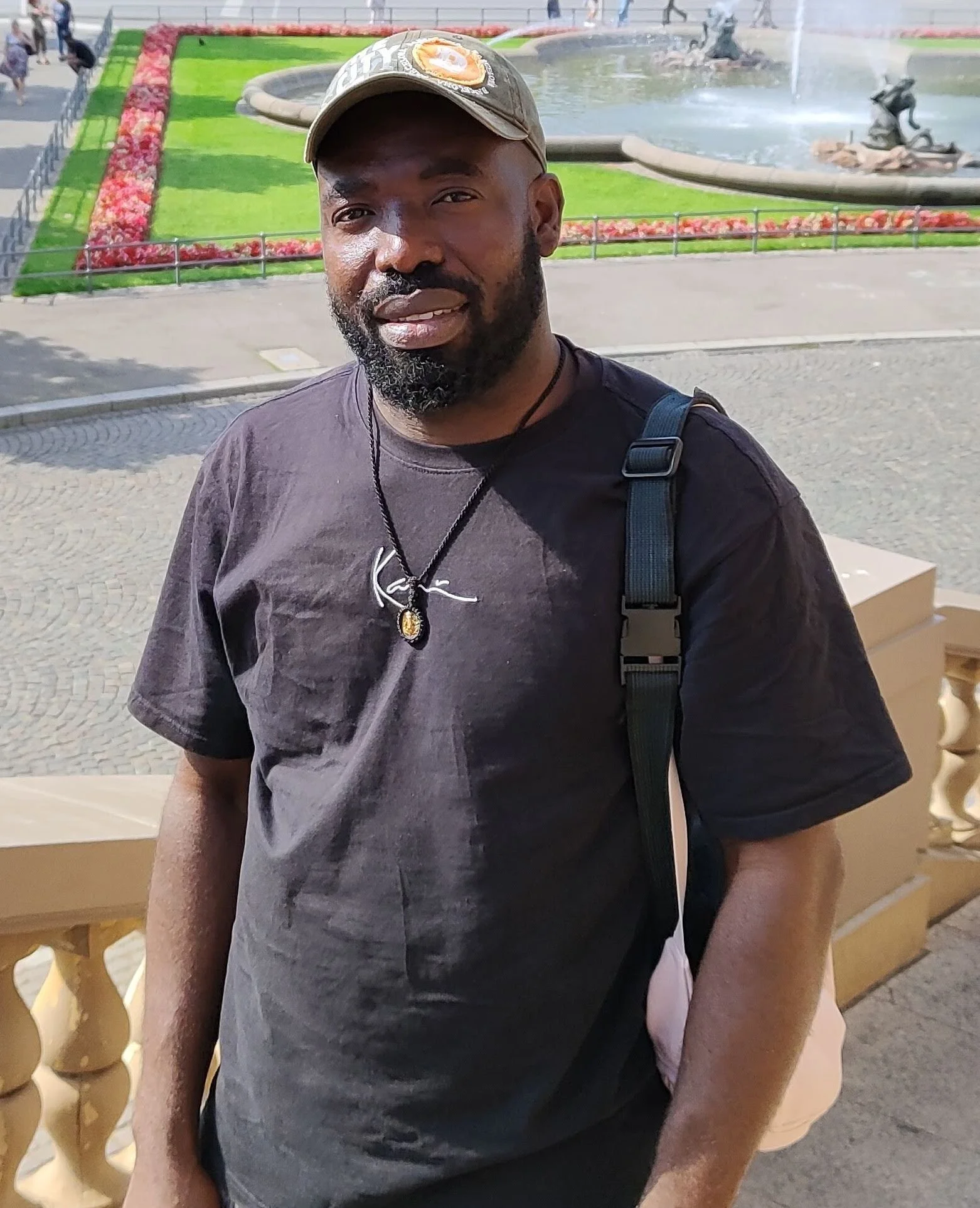
"I was managing a department at a manufacturing facility in my home country. I came to Germany to have a better life for myself and my family. But there's a gap between qualified people and employers, even more for immigrants."
David, 36 years old
User Needs
1. Help on translating skills and creating compelling CVs
2. Need a channel that bridges the gap with employers
3. Understand cultural underlying rules of behaviour and approaches
The User Journey
Design
Challenge
Based on the user research, we've mapped the journey to provide the big picture of the current experience along with the main pain points. The main outcome here is the opportunity section that gathers ideas that can possibly solve the user's pain points once turned into features of the system.
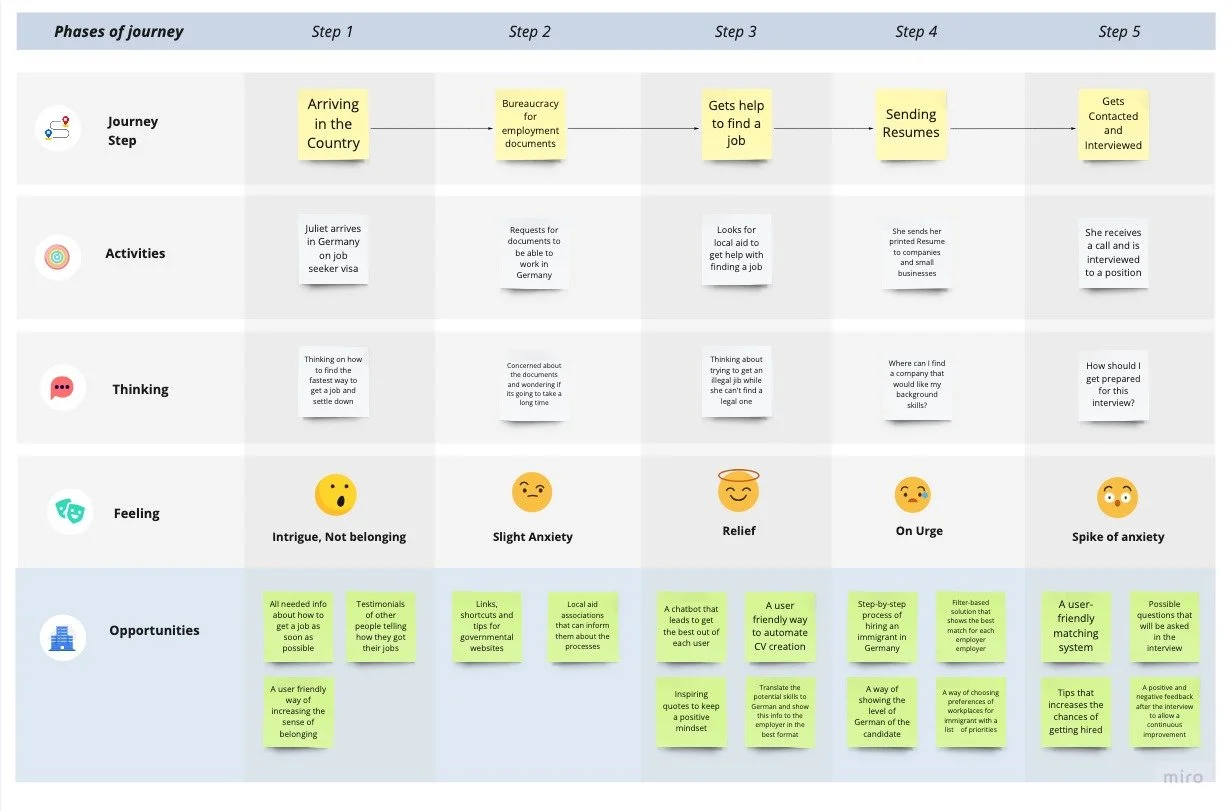
User Journey map of Cynthia (Job seeker persona)
How might we help immigrants to feature their skills and experiences, in order to attract attention and connect them to potential employers?
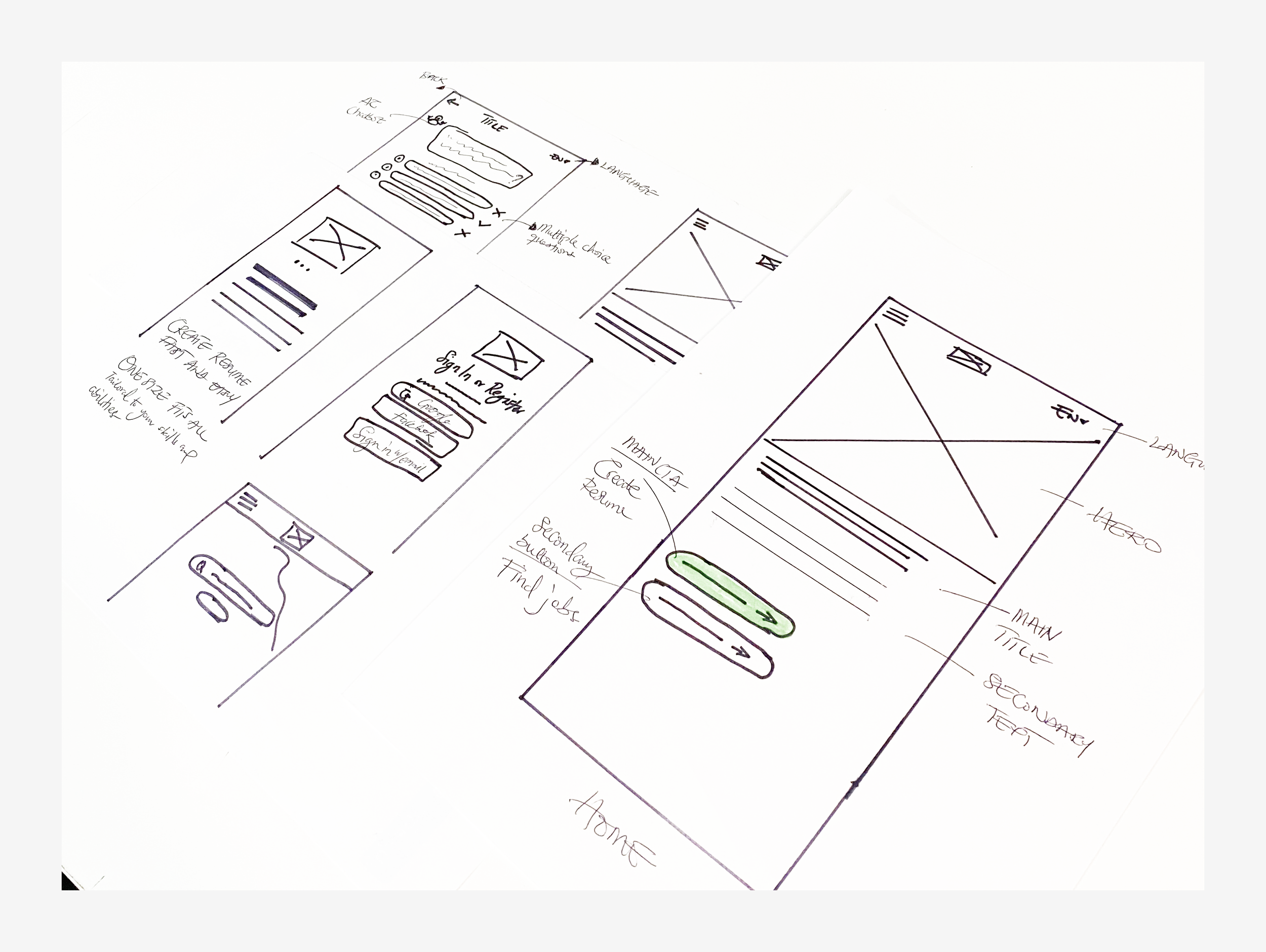
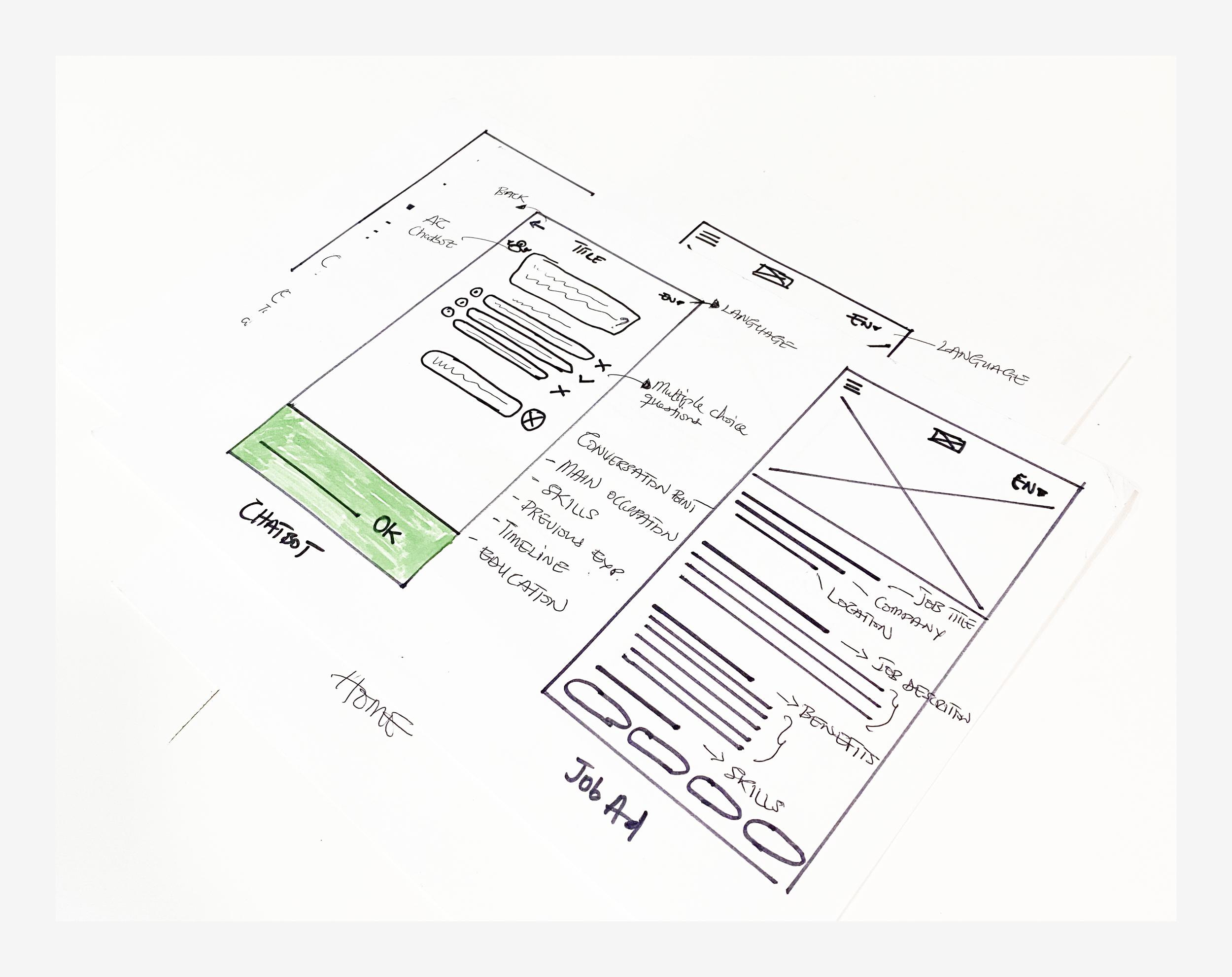
The two main points that the solution tackles are: a scalable way of automating the creation of curriculum — translating skills; and connecting them to potential employers that see great value in diversity in the work environment.
The Solution
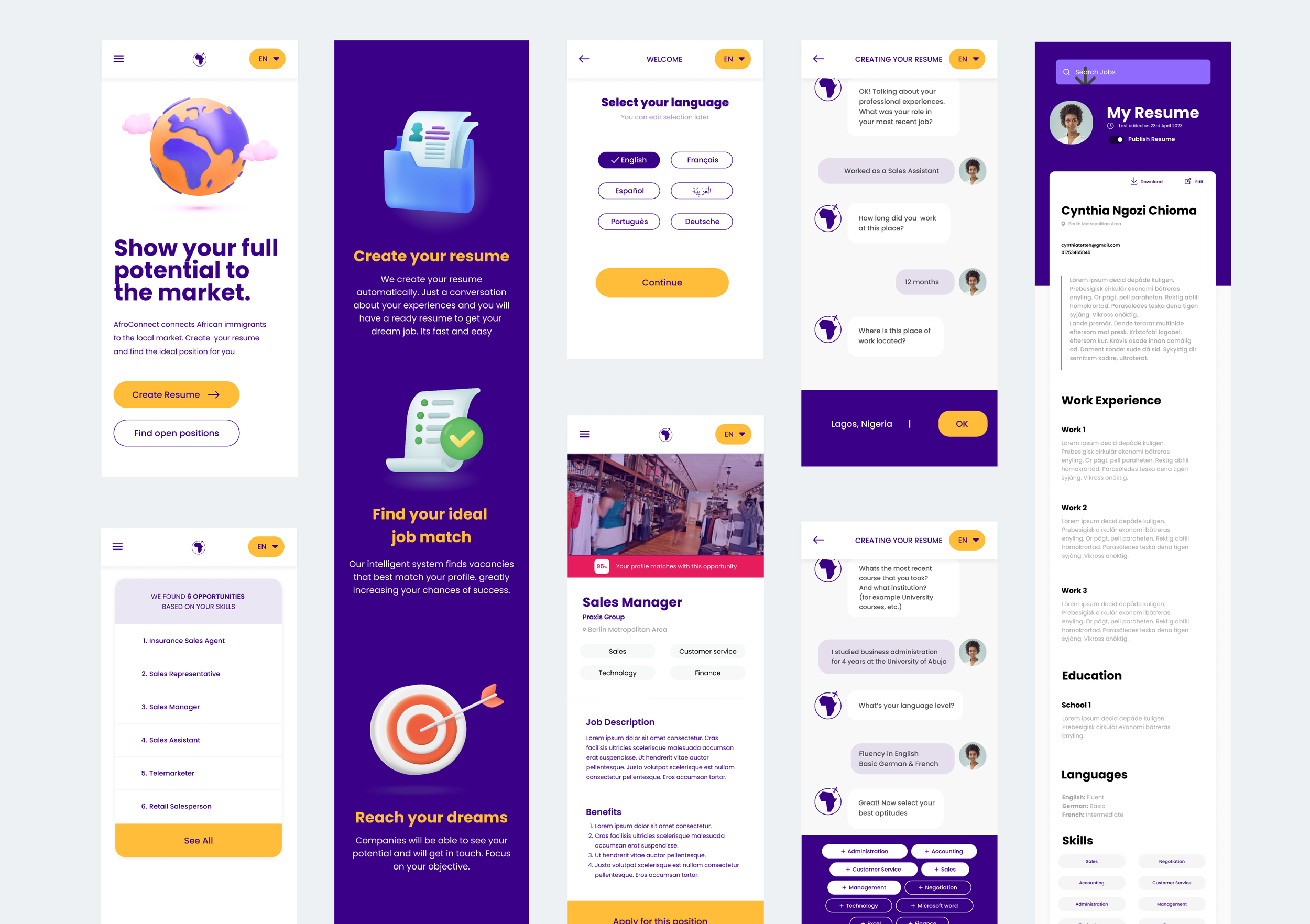
MOBILE FIRST?
Digital interaction is a reality for most immigrants and refugees I had contact with during the research. They use social media (Facebook and Whatsapp) on mobile as the cheapest and fastest communication channel.
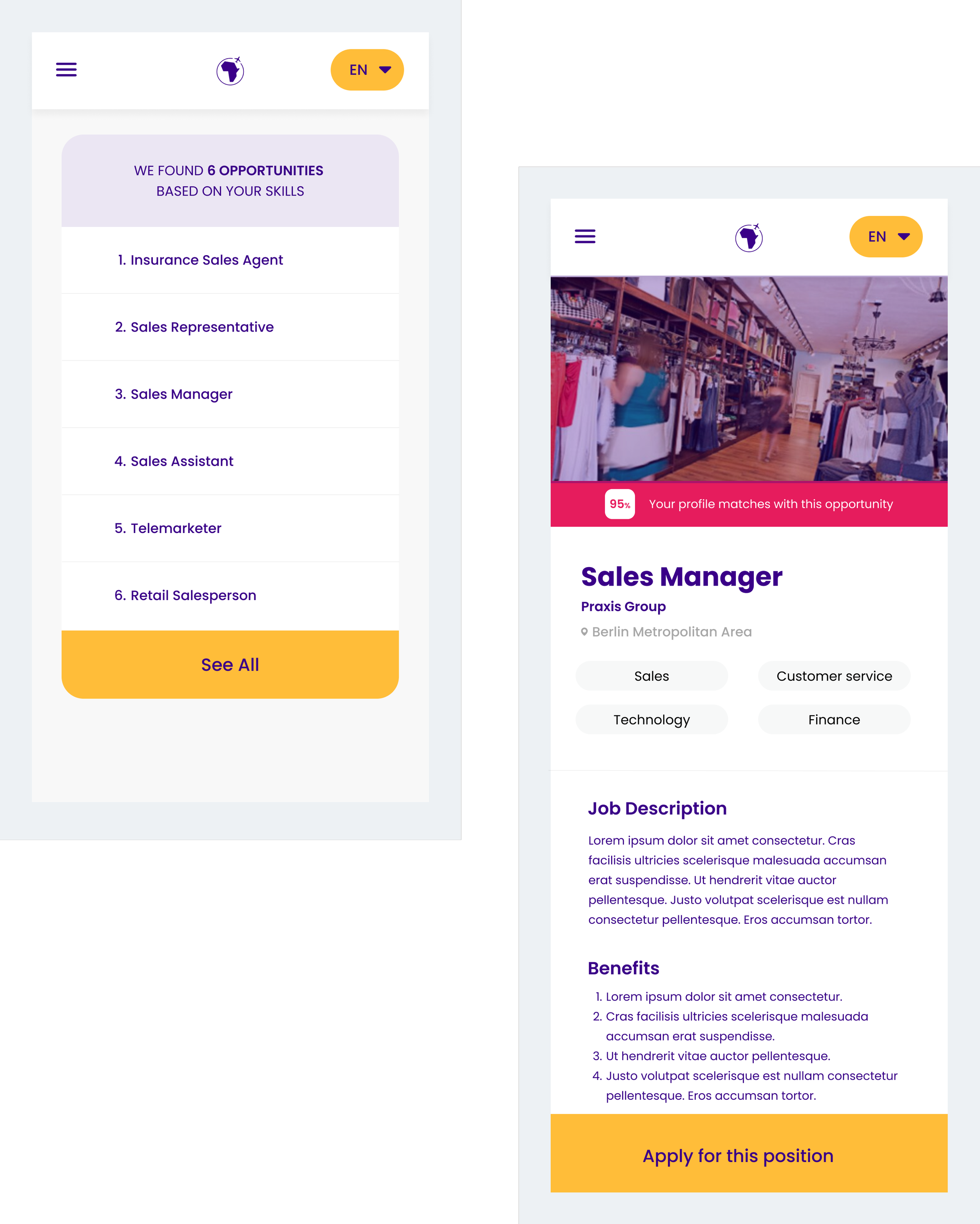
SMART JOB MATCHING
Powered by the collected data and open positions, the system suggests the top opportunities for the candidate.
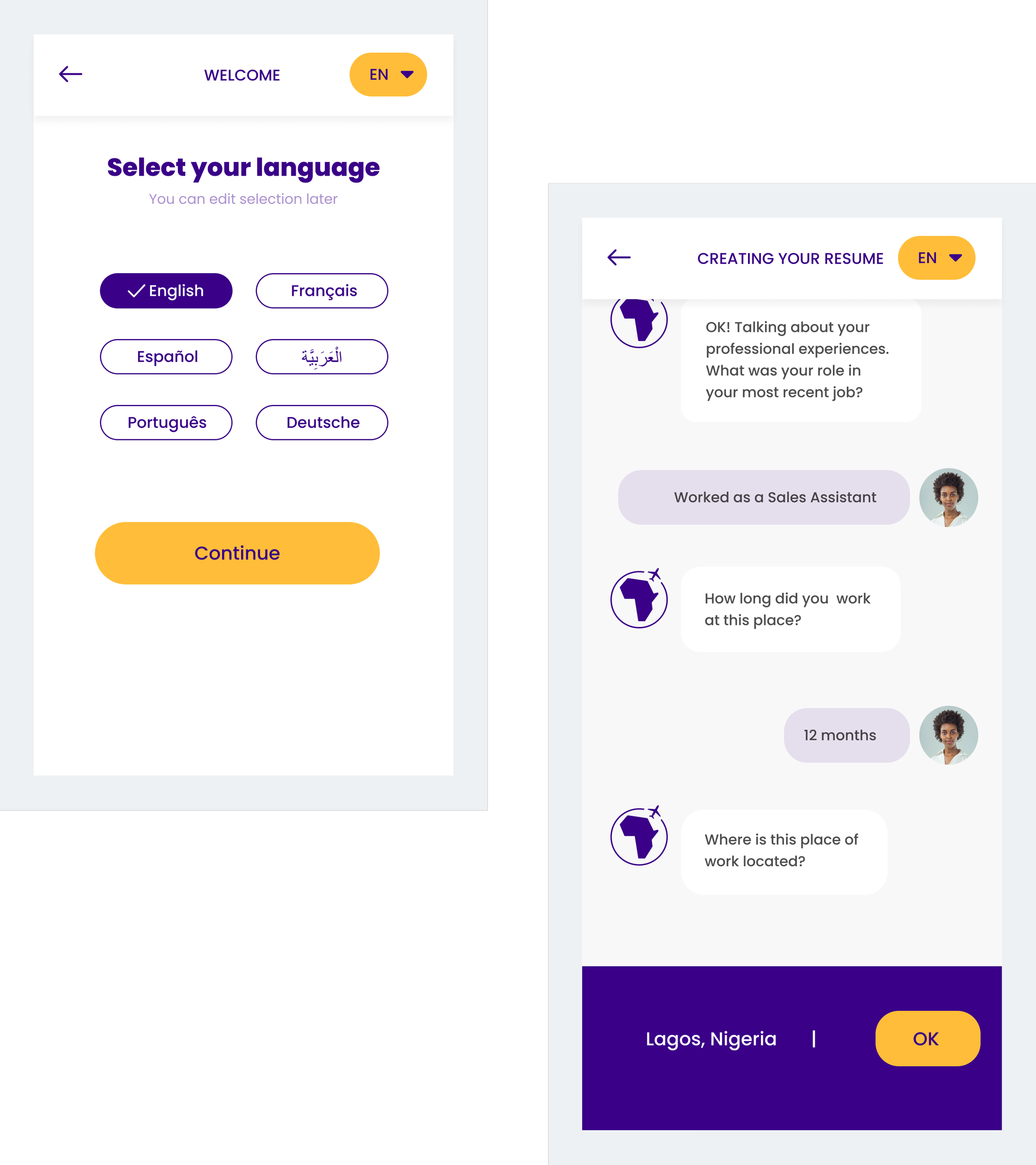
MULTI-LINGUAL CHATBOT
Collecting the user's strongest skills in a natural way. Speaking the user's language and respecting their mental model of interaction (Whatsapp users).
Validating Ideas
The main goal of user testing was to identify usability issues, and more importantly, discover if the overall idea would actually help them in real life.
LEARNINGS
01. Users thought they would be charged at some point
02 . "Share my CV" feature would be very helpful, once usually they apply to job posts via social media groups.
03. Users spotted ambiguous questions in the chatbot interaction.
04. Users were quite excited about having a way of creating their CVs in their own language. This feature alone showed great value and could help them to have fairer access to opportunities.
Learnings & Insights
1. Designing with purpose
This passion project has changed my life. Especially because it's focused on users with critical needs. More than learning with these people, I was able to connect with their dreams and huge resilience because, despite all their struggles, they are essentially happy.
2. Avoiding assumptions
The hardest thing about this project was avoiding assumptions and thinking straight into solutions. I thought immigrants wouldn't have access to smartphones and would never use the same apps I use. During the research, I found out how I was wrong.